Venus Has Been Waiting 40 Years.One Scientist Is Done Waiting With It.
Sara Seager is building the first probe to enter Venus's atmosphere in four decades, outside NASA, faster, cheaper, and hunting for signs of life in sulfuric acid clouds. What she finds may rewrite what we think we know about life's reach in the solar system.

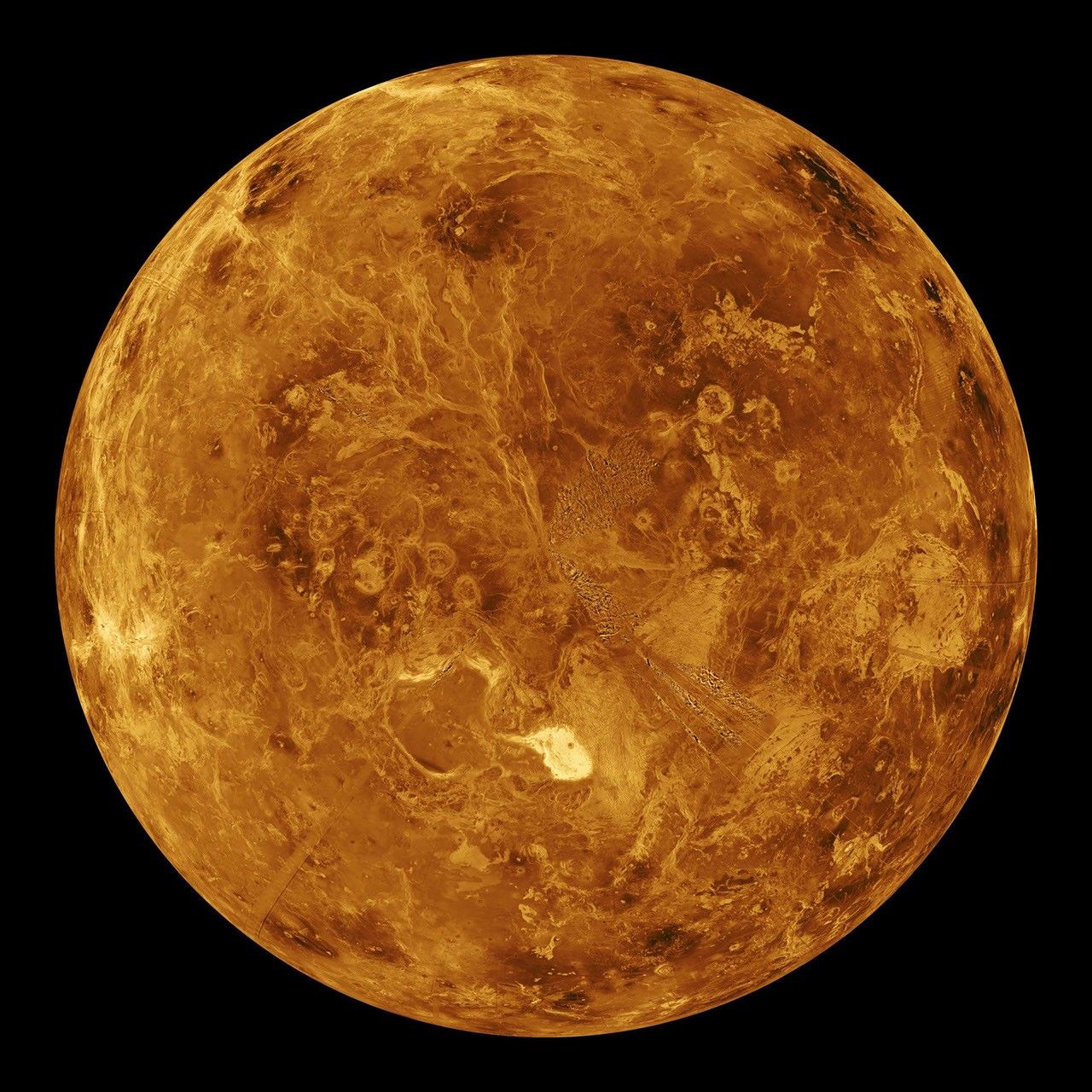
NASA/JPL The northern hemisphere is displayed in this global view of the surface of Venus as seen by NASA Magellan spacecraft.
The Soviet Vega 2 probe entered the atmosphere of Venus on June 15, 1985. Ronald Reagan was president. The Berlin Wall still stood. The probe descended through sulfuric acid clouds at ten meters per second, drifted in the upper atmosphere for 46 hours aboard a helium balloon, and then went silent.
No human-made object has entered the Venusian atmosphere since.
In the intervening forty years, astronomers discovered more than five thousand planets orbiting other stars, built telescopes capable of reading atmospheric chemistry around worlds so distant the light left before Rome fell, and grew comfortable with the idea that biology might exist almost anywhere in the universe. In all that time, we sent nothing to our nearest planetary neighbor. We looked at Venus from a distance, decided we understood it, and moved on.
Sara Seager, a professor of planetary science at MIT, finds this difficult to accept. "I'm really more interested in new things that don't exist yet," she says, surrounded by hardware in her lab that didn't exist two years ago. "New frontiers. New ways of doing things." She spent three decades reshaping the science of exoplanets, developing the mathematical tools to read biosignatures in the light of distant worlds, winning the prizes that come to scientists who build fields. Then she looked at everything she had built, and looked at Venus, and decided the frontier had moved.
It had been there all along. Twenty-six million miles away. Waiting.
"We shouldn't be just having one mission to a planet's atmosphere every four decades."
The story of why planetary science stopped going to Venus is a story about success.
The Soviet Venera and Vega programs went further than anyone expected. Between 1970 and 1985, their probes landed on the Venusian surface, survived long enough to transmit images and data, and revealed a world of crushing pressure and temperatures that exceed 450 degrees Celsius, hot enough to melt lead, hostile enough to destroy a probe within hours of landing. The surface of Venus was definitively not a place where life, as we understand it, could persist.
What this settled obscured something more interesting.
Fifty kilometers above that infernal surface, the atmosphere of Venus transforms. At that altitude, pressure approximates Earth's at sea level. Temperatures range between zero and 90 degrees Celsius, warm but not lethal by the standards of extremophile biology. If you suspended a thermometer in that cloud layer, it would read like a hot summer afternoon. The sulfuric acid would still kill you. But for organisms that had evolved to live in it, the physical conditions, pressure, temperature, the presence of sunlight and chemical gradients, overlap with environments where life exists on Earth.
Nobody went back to look.
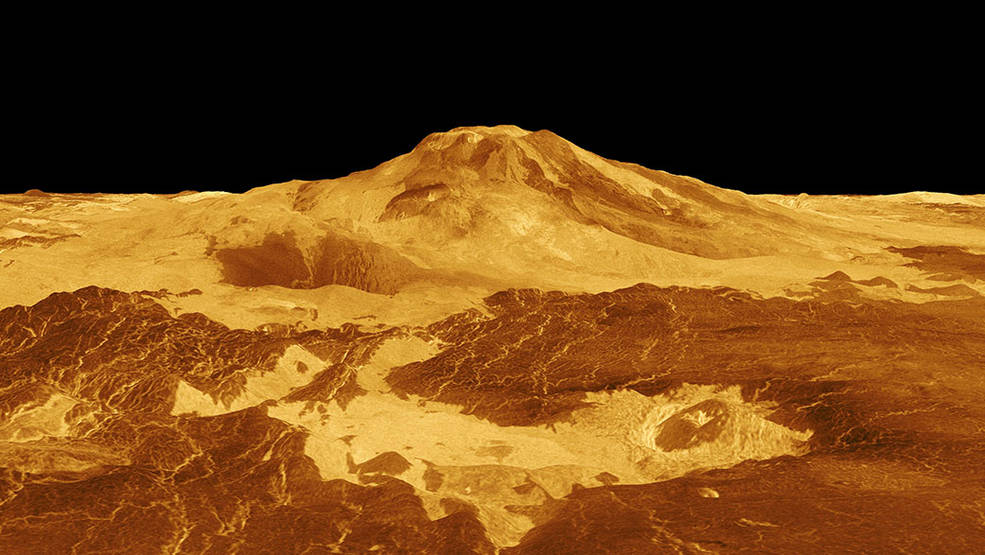
The field consensus that calcified over the following decades was simple: Venus is understood. Mars might have harbored ancient life; the ocean moons, Europa and Enceladus, likely have liquid water beneath their ice. Venus is a cautionary tale about runaway climate, not a target for astrobiology. The community moved toward Mars, toward the outer solar system, toward exoplanets. Venus receded.
Then, in September 2020, a team led by astronomer Jane Greaves announced the detection of phosphine in the Venusian cloud layer.
On Earth, phosphine is produced in two ways: by industrial chemistry, or by biology. It is a metabolic byproduct of anaerobic microorganisms, the kind that thrive in oxygen-poor environments. Detecting it in an atmosphere where industrial chemistry is obviously absent would, in principle, demand a biological explanation.
The announcement made international headlines. It also triggered one of the more heated scientific arguments of recent years.
Other researchers immediately challenged the analysis. The signal, they argued, had been significantly overestimated through errors in data reduction. When multiple groups reanalyzed the observations, the apparent phosphine concentration dropped sharply. What had briefly looked like a discovery collapsed into genuine ambiguity.
Seager, who was part of the original research team, is careful about where she now stands. The detection remains unresolved. "The fact that Venus is kind of a living, breathing planet is pretty compelling," she says. No one knows what is in those clouds. And the reason no one knows is that no instrument has entered them in forty years.
That is the scandal. Not whether phosphine was detected, but that the question is unanswerable from Earth. That the most basic chemical inventory of our nearest neighbor's upper atmosphere remains incomplete because the field moved on before finishing the work.
Morning Star: five minutes, forty years of waiting.
The phosphine controversy did one useful thing. It reignited scientific interest in Venus at a moment when the barriers to a focused, fast atmospheric mission were lower than they had ever been. Private launch vehicles had collapsed the cost of reaching orbit. Miniaturized sensors could carry meaningful instruments inside a small probe. The traditional pathway, years of committee review, consensus-building, budget cycles, was no longer the only route to a planet.
Seager assembled a team and took the other one.
The Morning Star mission has a simplicity that disguises how difficult it is. A small probe, launched aboard a Rocket Lab vehicle, travels to Venus and releases a capsule into the atmosphere. The capsule descends through the cloud layer. It has approximately five minutes inside the region scientists most want to study.
The instrument at the probe's core is called an autofluorescence nephelometer, or AFN. It fires a laser at cloud particles drifting past the descending capsule and measures the light that bounces back. From the angle, intensity, and spectral profile of that backscattered light, the instrument determines the size and shape of individual droplets and whether they contain organic molecules. Sulfuric acid droplets have a known optical signature. If the AFN sees only that, the result is informative but not exciting. If it sees something else, particles that fluoresce in ways pure sulfuric acid does not, that is when the science demands attention.
It would not be proof of life. It would be evidence of chemical complexity that requires explanation.
The pre-mission laboratory work has already produced unexpected results. Seager's team spent months testing the stability of organic compounds in concentrated sulfuric acid, expecting most to be destroyed almost immediately. Instead, they found that a wider range of compounds survives than predicted. If organic molecules are more stable in Venusian cloud conditions than the field assumed, both a positive and a negative signal from Morning Star carry more interpretive weight.
Schmidt Sciences is funding the science instrument and the associated research that makes the mission viable. The support arrived at the moment when the mission existed as a credible scientific idea but lacked the hardware development funding that traditional peer review tends not to provide to proposals this unconventional. "Schmidt funding allowed me to pursue high-risk ideas that would have been difficult to support through conventional mechanisms," Seager has said. The instrument was built. The mission became real.
"Venus is not a dead end. It is a data point the field stopped collecting."
The model Seager is demonstrating, small, fast, targeted, built outside standard institutional channels, is not a critique of large-scale planetary science so much as an argument for what it is missing. Large flagship missions are irreplaceable. The James Webb Space Telescope changed what we can know about the universe. The Mars rovers rewrote that planet's history. These missions required the coordination and resources that only institutions can provide.
But they take decades. The consensus process that governs them tends, structurally, to favor questions the community already agrees are worth asking over questions that remain contested. A mission designed to search for life in Venusian clouds, a hypothesis many researchers regard as speculative, is exactly the kind of proposal that gets declined in favor of something more defensible. The cost of that caution is measured in unanswered questions.
Every world in our solar system represents a different outcome of the same starting conditions. Mars shows what happens when a planet loses its magnetic field and its atmosphere bleeds into space over billions of years. Titan shows what organic chemistry looks like when liquid water is replaced by liquid methane. Venus shows what happens when you are almost Earth, same size, same mass, formed from similar material at a similar distance from the same kind of star, and then diverge.
Seager is done arguing without data.
Morning Star will launch. The probe will descend. The AFN laser will fire. And in five minutes, Seager and her team will have atmospheric data no one has collected since 1985. The result may be definitively negative. It may be ambiguous. It may be the most important five minutes in planetary science in a generation.
What it will not be is silent. The clouds of Venus have gone unexamined for forty years. That, at least, is about to change.