
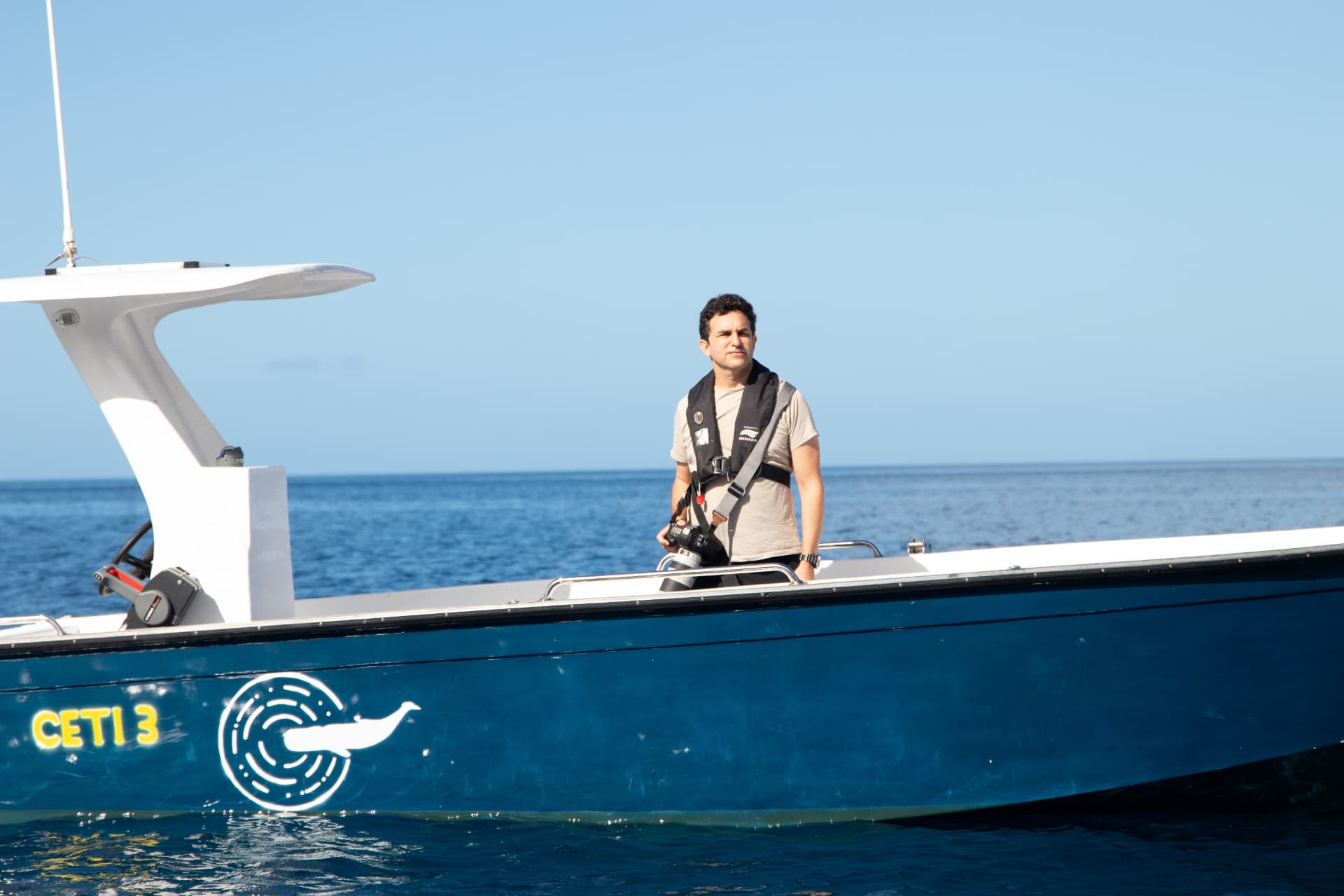
The Man Who Listens to Whales
David Gruber wants to know what sperm whales are saying. He thinks it might actually be possible.
Photo by Michael Lees / National Geographic Society
Gruber is a marine biologist, a professor, and the founder of Project CETI, the Cetacean Translation Initiative, a project using artificial intelligence and machine learning to decode the communication of sperm whales. To some, it’s the most audacious scientific undertaking of our time. To others, a beautiful fool’s errand. Gruber sees it as the next logical step.
He started, as many scientists do, as a kid who couldn’t stop staring. Growing up in New Jersey, Gruber was the boy crouched in the grass, watching ants, not with the detached curiosity of a future entomologist, but with something closer to kinship. He was a sensitive, awkward child who connected more easily with the small creatures in his backyard than with other kids. That quality never left him. It became his method.
His academic path wound through microbiology, biological oceanography, bacteria-protozoa interactions, fish, sharks, sea turtles, and visual communication before arriving, eventually, at sperm whales. In 2019, he was under the ice in Greenland on an expedition with the American Museum of Natural History, searching for glowing fish. What he found instead was dread. The glaciers were melting at a pace that felt almost indecent, millions of years of accumulation dissolving in what felt like no time at all. Standing inside that collapse, Gruber made a decision. He would devote the rest of his career to whales, not because the problem was small, but because he believed that making people fall in love with another species might do more for the ocean than any policy paper ever could.
He thinks of Roger Payne’s landmark recording of humpback whale songs, released in 1970. “Whales sing,” he says. “People responded from a place of heart. Whales sing, I want to protect them.”
It might reveal that another deeply intelligent species has been living beside us all along…
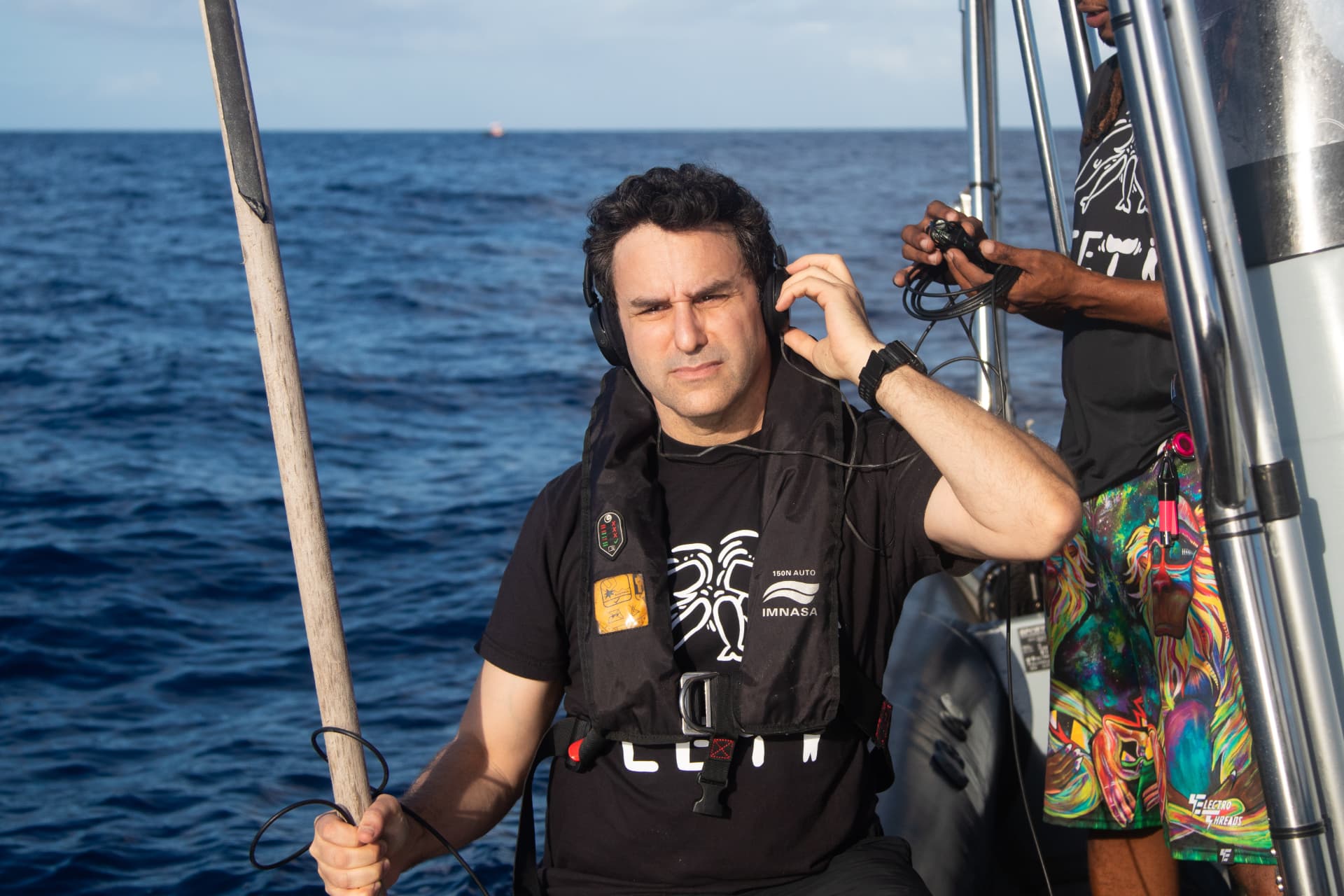
CETI takes a different and more radical approach than previous whale research. Rather than simply documenting sounds, the project applies large language models and machine learning to the acoustic signals of sperm whales, the clicks, creaks, clangs, and chirrups that Gruber describes sitting with on a boat, eyes closed, headphones on, listening to whales moving unseen in the water beneath him. The goal is not to catalog these sounds but to understand them.
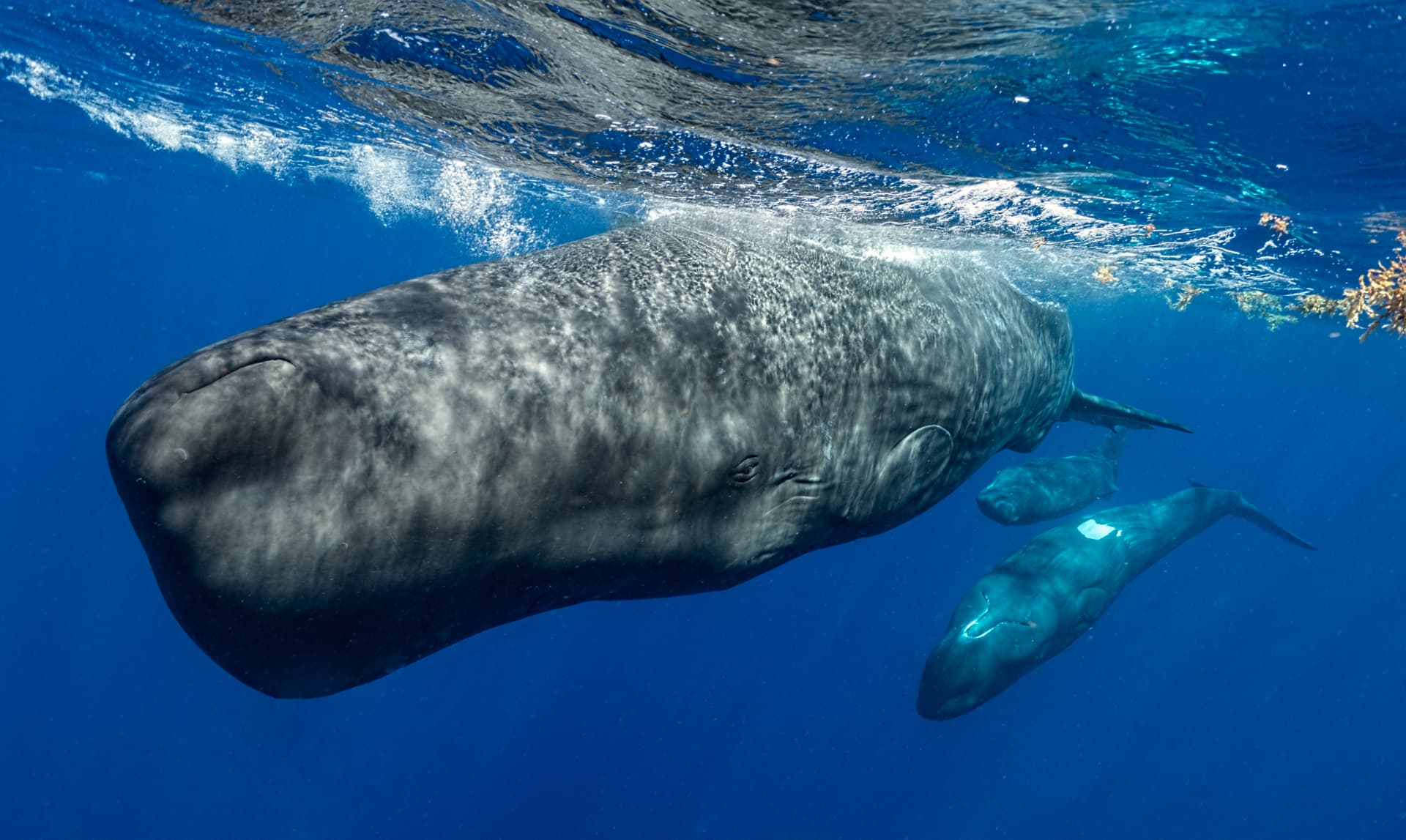
What the team has found is striking. Sperm whales communicate in structured sequences of clicks called codas, and within those sequences, researchers have identified vowel-like features. By compressing the silences between clicks and adjusting frequencies, spectrograms emerge that are nearly indistinguishable from human vowel sounds. Gašper Beguš, the project’s linguist, found that even trained phonologists couldn’t always tell them apart. The whales also use regional dialects, learned, not innate, passed down through matrilineal clans across generations. Baby sperm whales go through a babbling phase. These are not coincidences but convergences, creatures whose last common ancestor with humans lived 92 million years ago have independently evolved communicative features that closely resemble our own.
Gruber is careful not to overclaim. Everything CETI publishes goes through peer review. When pressed on findings beyond sperm whales, something extending to orcas, he hints, but declines to say more until the work is validated. The scientific method, he says, is the guardrail. He prefers to work from Charles Hockett’s classic features of language, displacement, productivity, cultural transmission, and ask empirically whether the whales meet them. One by one, he says, they are beginning to.
He believed that making people fall in love with another species might do more for the ocean than any policy paper ever could.
The project is sprawling and deliberately so. The biggest findings, Gruber says, have come from the team’s range of expertise, biologists, linguists, natural language processors, cryptographers. The lead theorist, Shafi Goldwasser, holds a Turing Award in cryptography. Their whale acoustic model, called WhAM, the brainchild of Orr Paradise who completed his PhD with Goldwasser, lets researchers probe a synthetic reconstruction of whale language and study how it responds, a whale, in a sense, they can engage without disturbing a real one.
That concern shapes everything. Gruber is wary of transmitting anything to actual whales before the team knows what it’s saying. He describes the scenario with dry humor, spending two weeks tracking a pod, setting up an elaborate acoustic experiment, and saying something that amounts, in whale, to a profound insult. The ethics are real, though. He is working with researchers at NYU’s More-Than-Human Life Program (MOTH) on the first guidelines for responsible interspecies communication. If a genuine exchange ever becomes possible, he says, it shouldn’t belong to any one scientist or institution. It should be a collective decision.
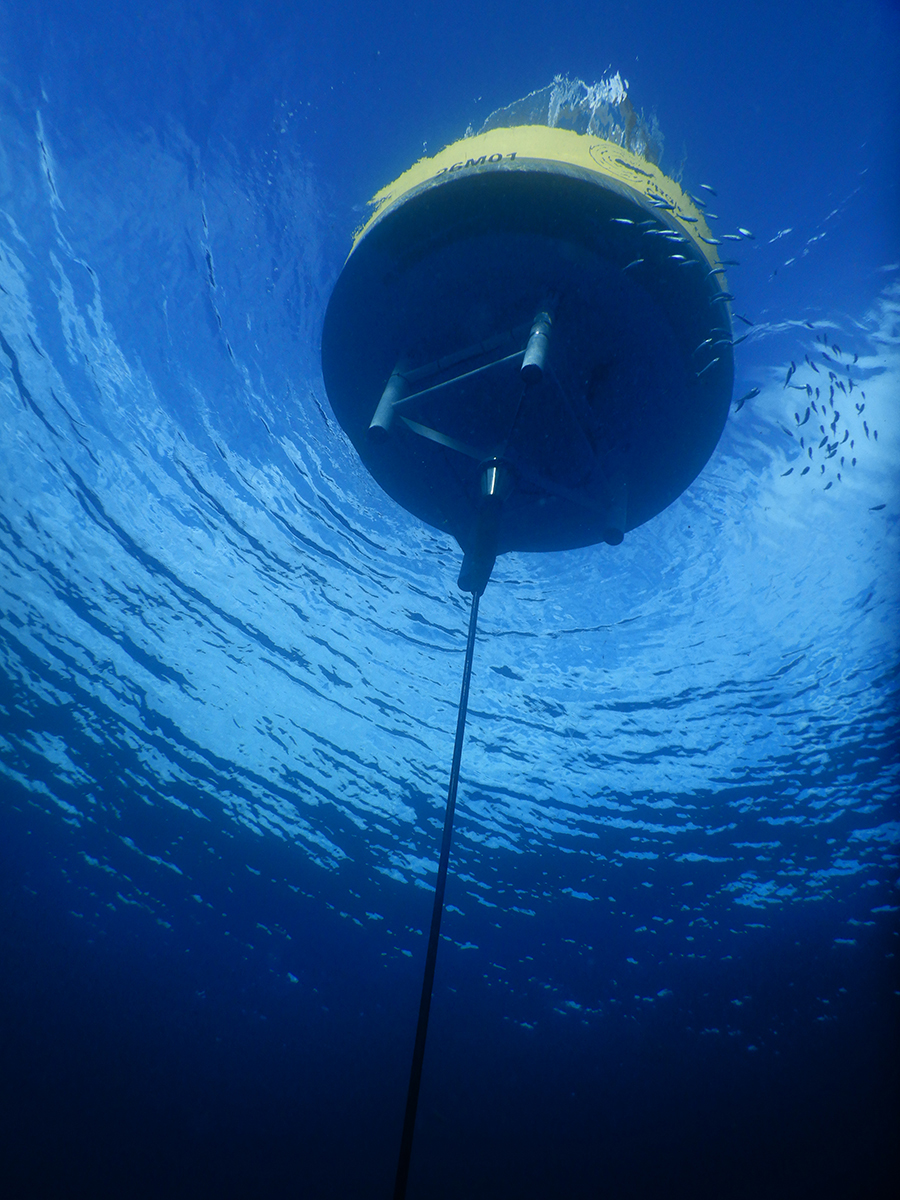
When asked what a first real conversation with a whale would mean for humanity, Gruber goes quiet for a moment. It would be humbling, he thinks. It might reveal that another deeply intelligent species has been living beside us all along, animals that form multi-generational matrilineal societies, pass cultural knowledge across centuries, and communicate with a sophistication we simply lacked the tools to perceive. It might make us feel rather small. For Gruber, that’s the point.
There’s another deeply intelligent species down there, he says. We’ve known it for a long time. We’re just finally starting to listen.
John Steele is the Publisher and Executive Editor of Blue Continuum.


Get The Continuum, our free Thursday newsletter.