An Ocean Planet
in Space.
Astronaut and aquanaut Nicole Stott on why Earth is an ocean planet in space, how living underwater prepared her for orbit, and what it means to be a crewmate.
John Steele is the Publisher and Executive Editor of Blue Continuum.

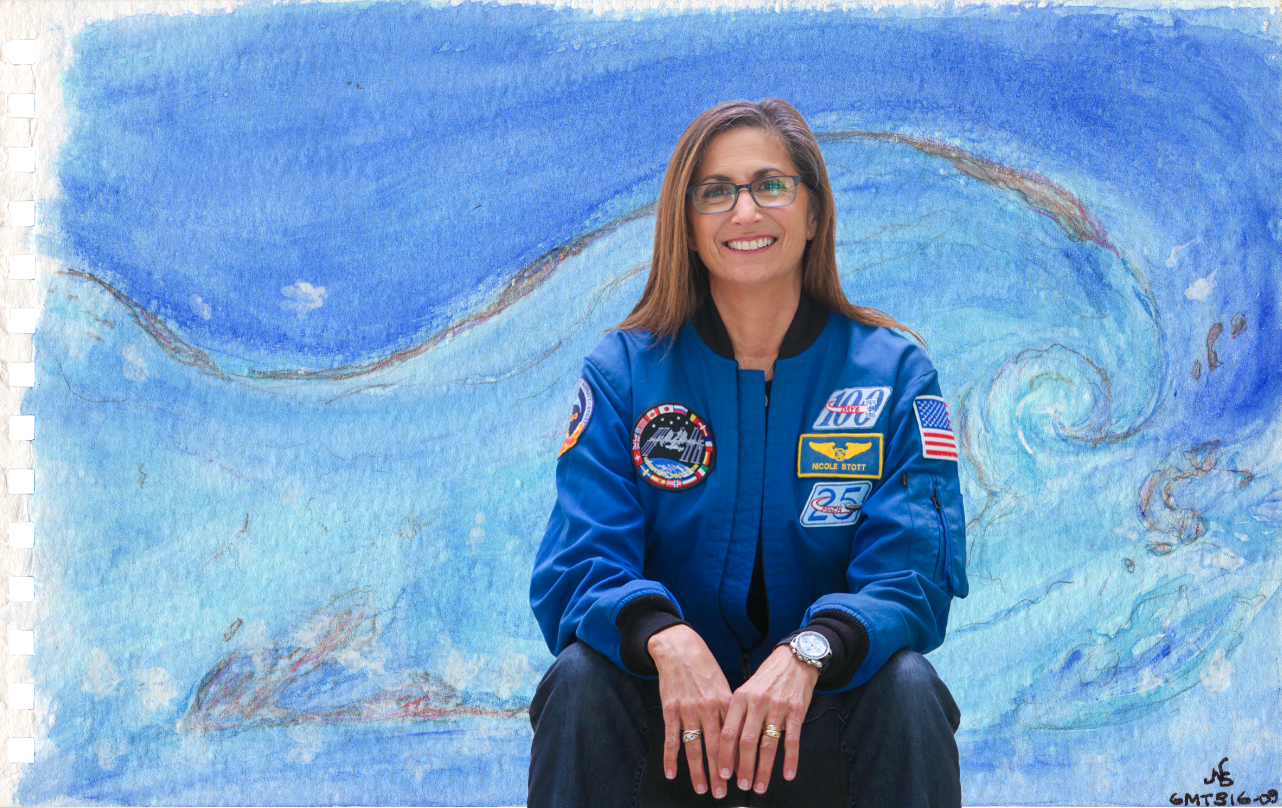
Nicole Stott, astronaut and aquanaut, photographed against a wave backdrop.
Nicole Stott has experienced Earth from two of its most extraordinary vantage points, beneath the ocean and above the atmosphere. As an astronaut, she lived and worked in space, looking back at a planet dominated by water and wrapped in a luminous atmosphere that appeared startlingly thin. Before flying in space, she spent 18 days living beneath the sea in the Aquarius undersea habitat, where the confinement, dependence on technology, teamwork, and inability simply to escape made the ocean an uncanny analogue for life in orbit.
Those experiences have led Stott to think of sea and space not as separate frontiers, but as parts of one continuous system. Earth, she says, is not simply a planet in space. It is “an ocean planet in space”, a distinction that becomes more profound as scientists search other worlds for the water that surrounds us here.
Today Stott brings together exploration, environmental advocacy, and art, encouraging people to think of themselves not as passengers aboard Earth, but as members of its crew. In this conversation, she discusses what the ocean taught her about space, what space taught her about Earth, and why the farther humans travel into the universe, the more remarkable our own planet becomes.
John Steele: The main reason I wanted to have this conversation was your work at the intersection between space and ocean. You’ve written and talked about that connection a great deal. What do those two worlds mean to you?
Nicole Stott: I think they mean everything, actually. The way that they work together keeps us all alive.
Over time, it’s become like the lessons I learned from flying in space. They seem so simple. This whole idea of living on a planet, all being Earthlings, the only border that matters being that thin blue line of atmosphere. And ultimately, how important it is to be crewmates and not passengers on our planetary spaceship.
For me now, it’s not just that we live on a planet. We live on an ocean planet in space. And there’s a significance to that one word, to how viable this place is for us.
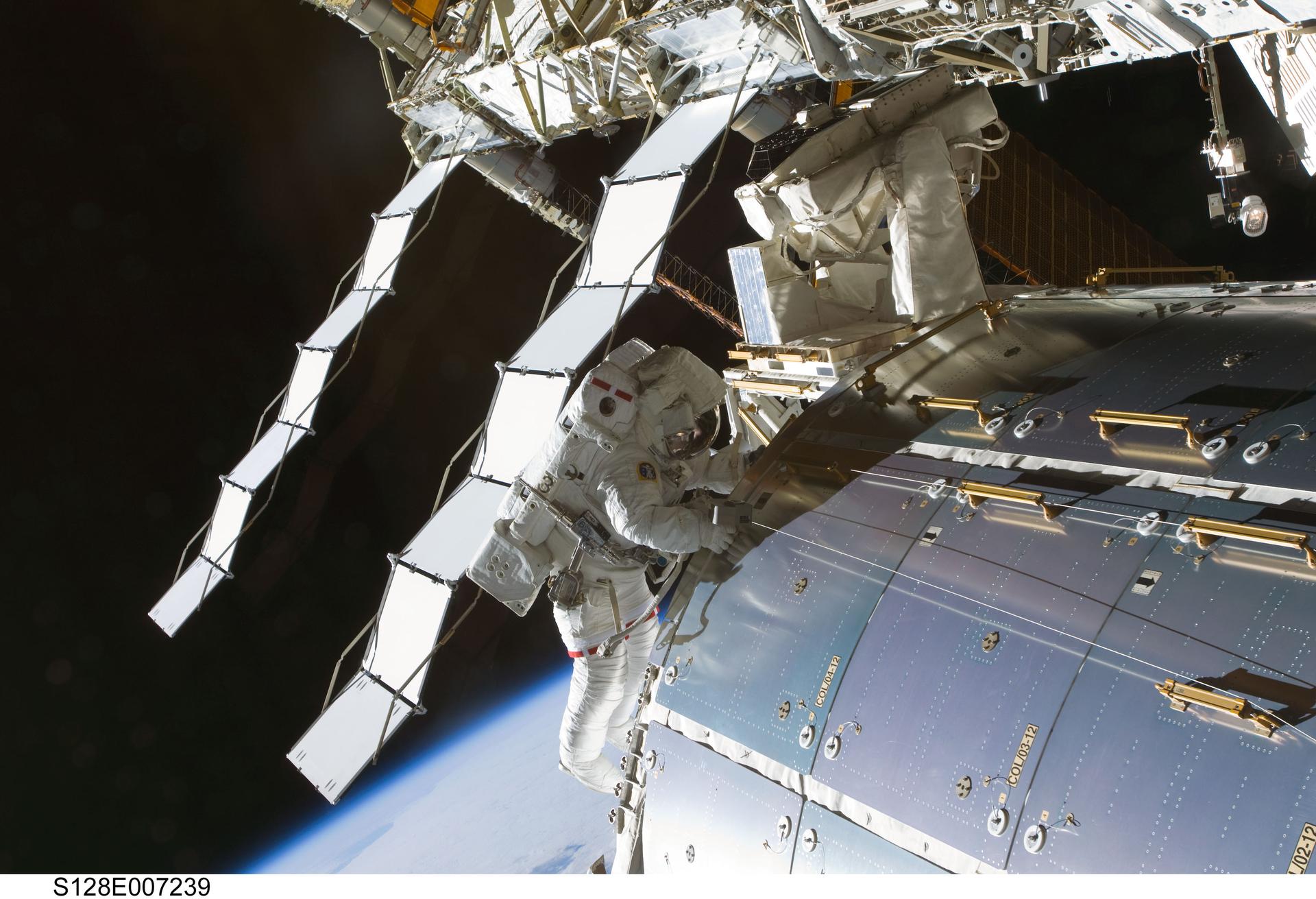
We’re searching for that on all these other planets and moons. We’re searching for active oceans or ones that may have existed at some other time in history and could have supported life. We might be finding water, ice, and things like that. But this ultimate uniqueness of what Earth as an ocean planet provides for us, not just for us, but for all life on Earth, just keeps coming back to me.
And I love this idea of the continuum, that thin blue line between sea and space that is absolutely what allows us to survive and, hopefully, thrive in this place.
JS: You were trained as an astronaut, but you’ve told me about the amount of training you also did underwater in preparation for spaceflight. Was that where you began connecting more deeply with the ocean?
NS: Absolutely. I grew up in Florida and loved the water. I got my scuba certification when I was around thirty, and I loved diving and being immersed with the reefs and whatever life might be there.
But I was a recreational diver. I really didn’t want people touching my mask or taking my regulator out or messing with my equipment. I didn’t want any of that.
Then, in preparation for going to space, we got to live in the Aquarius undersea habitat. To be allowed to do that, you had to prove that at sixty feet underwater, if something happened to you, you weren’t going to bail and swim to the surface, because you’d likely kill yourself. After being at that depth for an extended period of time, you’re saturated with nitrogen. We were going to be there for 18 days.
They needed to have as much confidence as possible that you weren’t going to hurt yourself or your crewmates by bailing to the surface if something happened.
I ended up having to do diving skills I really never wanted to do. But to do the mission, I had to. And it made me realize there were probably going to be things about spaceflight that were going to be uncomfortable, things I didn’t know whether I could handle, but I needed to.
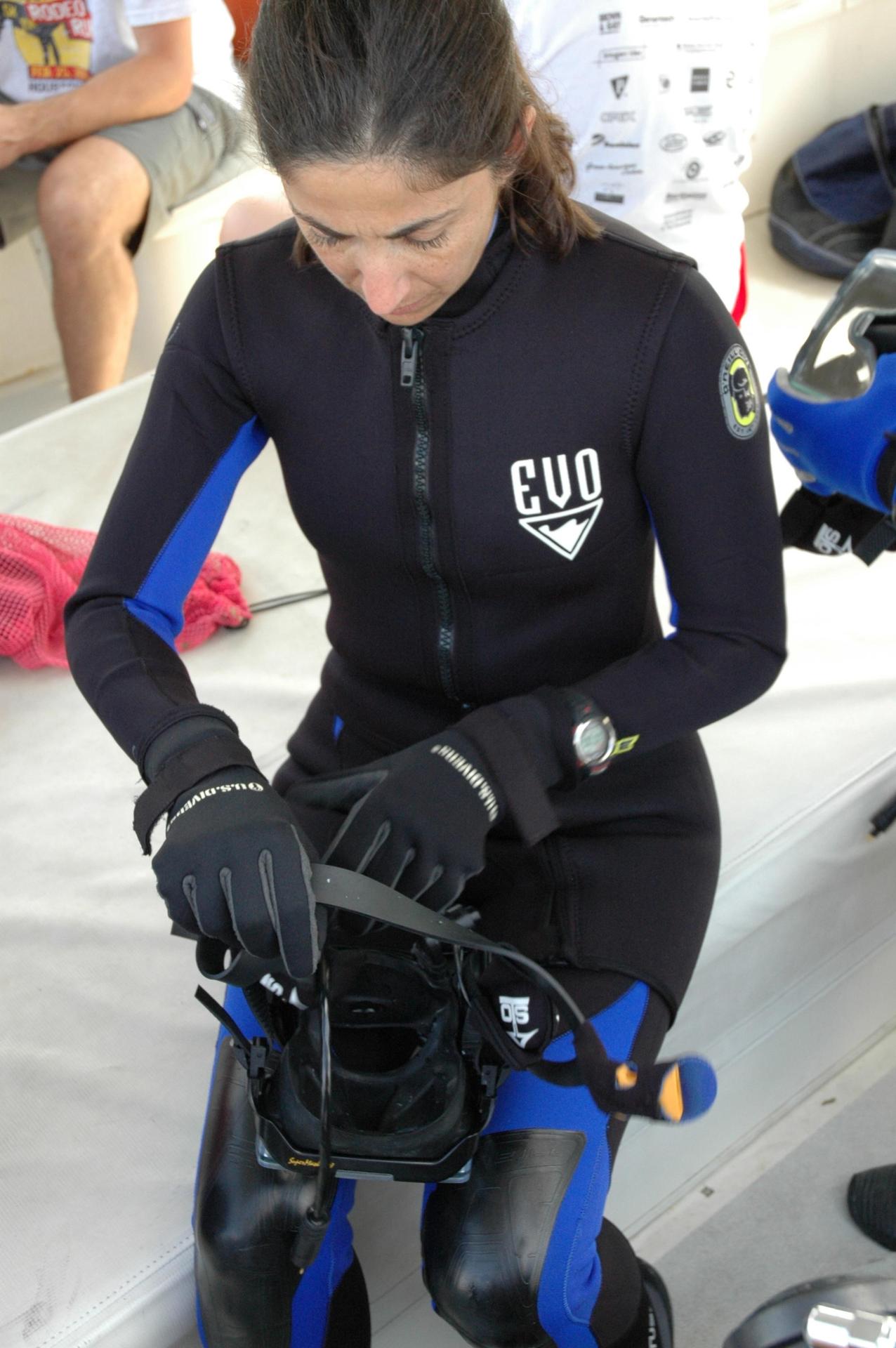
So I did a lot of extracurricular training. I found people who could help me in the Neutral Buoyancy Laboratory, the big swimming pool where we train for spacewalks.
I got to the point where I could swim all around the bottom of that ginormous pool without my mask on. I could do twice what they required for the swim test. I could feel comfortable with my regulator out of my mouth.
These were all things that, mentally and psychologically, I had convinced myself I couldn’t do and was a little freaked out about. But by approaching people and asking them to help me, I did them.
Now I feel so comfortable when I’m in the water.
There was that technical side of it, just being ready. But then there was this realization that the ocean is a perfect analogue for what it’s like to be in space.
You’re in this relatively confined space. You have to get along with people in that tight place. If something goes wrong, you have to be prepared to deal with it right there. You have to get your crew in a good configuration, get your vehicle in a good configuration, before you can go to the surface.
Everything we did there was a kind of mirror of what I would be doing on a space station.
To go outside, you had to put on special equipment, so we treated that like a spacewalk. We communicated with our topside team, just as in space you talk to your Mission Control team on the ground. You’re always communicating and working together.
And we were doing science in the ocean that was similar in many ways to what we would be doing in space.
So it was absolutely the best analogue for what it was like to live in space.
“the ocean is a perfect analogue for what it’s like to be in space.”
JS: Astronauts often talk about the “overview effect”—that profound change in perspective that can come from seeing the Earth from space. Did you experience anything similar underwater?
NS: I did. I had the undersea experience before flying in space, and we’d all heard about Frank White’s overview effect and this idea of experiencing the Earth from space.
And, man, I felt something very, very similar to that being in that undersea environment for an extended period of time.
You become very aware, looking at the creatures all around you, that you’re the one who is out of place. It’s almost as though they’re looking into the habitat thinking, “Who’s in the aquarium now?”
We weren’t the ones who were supposed to be there. That was where they lived. And yet, as humans, we had figured out ways to survive in that place.
We joke that we get to go live in inner space to learn how to live and work in outer space.
You’re surrounded by the planet in a way that starts to feel comfortable. But at the same time, you realize, wow, I’m not necessarily meant to survive in this place, and yet we’ve figured out ways to make that happen.
JS: When you finally did fly in space and looked down at the ocean, were there particular moments that crystallized that interconnection for you?
NS: I think every time you look at it, it does.
Whether it’s night or day, there’s that line, and I mean a thin line of atmosphere. During the day you see it glowing blue. At night it might have this gold or greenish tint.
It’s this reality check: My gosh, that is it.
It’s like the thin metal hull of my space station. That is it between me and surviving or not. And the same is true for all of us down here on Earth.
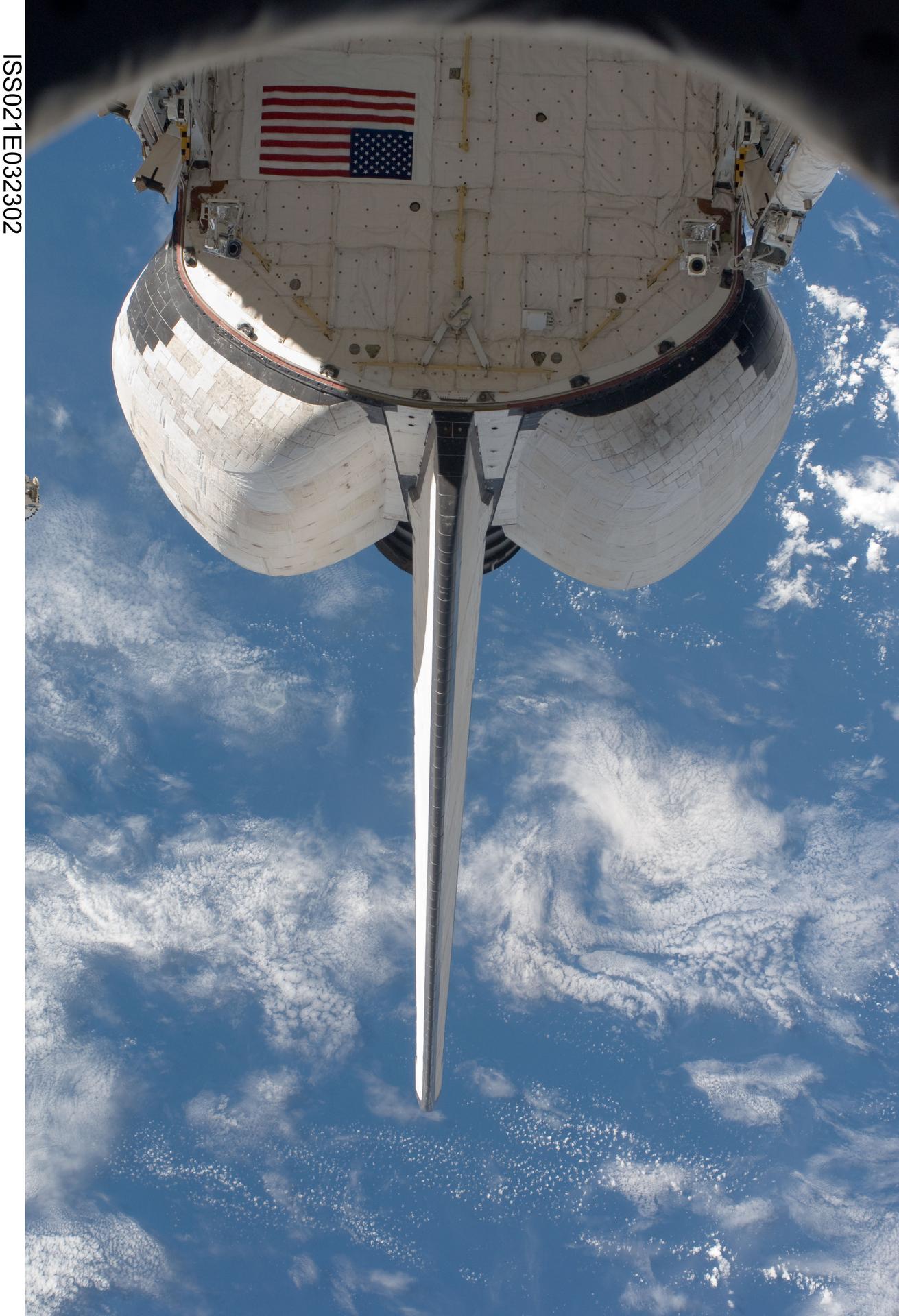
And looking out the window, unless you had checked the computer and knew, “Okay, at three o’clock I’m supposed to be flying over Florida, so I’m going to go look out the window,” generally, if you just floated up to the window, it was pretty likely you were going to see ocean.
The ocean was this constant presence.
Night or day, the colors and all of it, it just makes you want to get into it and underneath it, too. Now that I’m back, I’m trying really hard to spend more time in that place as well.
JS: Since coming back, you’ve become one of the people actively making this connection between space and ocean through your work and the events you participate in. Do you think people understand the connection?
NS: I think they do.
It’s interesting. Sometimes you can see this little light go off in people’s heads.
Even when I’m just talking about the idea that we live on a planet, that we’re all Earthlings, that there’s this thin blue line around us—we all learned that when we were children. We probably learned in kindergarten that we live on a planet in space.
But I don’t think the compelling nature of that is really explained to us or expressed to us when we’re young.
And then, as we get older, it becomes just another fact. It sits in the back of your mind. You’re not actively considering it every day.
What I try to encourage people to do, and I do this myself every day, is when I wake up and my feet hit the floor, I stand there for a second and remind myself... I am standing on an ocean planet in space.
We are spinning at a thousand miles an hour and traveling around the Sun. All of this is almost unimaginable when you consider how comfortable and stationary this place feels.
When I talk to people about that, there is a moment of, “Wow. Yeah, you’re right.”
That sky that looks like it goes on forever really doesn’t.
And then I want people to think about being a crewmate, not a passenger, because I think that is really the big thing.
It’s one thing to know you live on a planet in space that is kind of like your spaceship. But you then have to behave like a crewmate on it and not a passenger on board.
At a minimum, we need to sustain the things about this planet that, even if it’s selfishly motivated, will keep us and the other life we share it with alive.
It seems so simple. And yet it isn’t.
“It’s one thing to know you live on a planet in space that is kind of like your spaceship. But you then have to behave like a crewmate on it and not a passenger on board.”
JS: E.O. Wilson famously emphasized that there is no second Earth waiting for us. At the same time, there is enormous interest in Mars, lunar settlements and eventually living beyond Earth. Do you think there is a future for us out there?
NS: I do.
I like all of the ideas about the different ways we might live off the planet.
But until we discover something radically different, and maybe by then we’ll have achieved some kind of Star Trek or Interstellar future, anywhere we go in the foreseeable future, we’re going to have to turn that place into a spaceship.
We’ll have to do exactly what we do on the space station: build it in a way that mimics, as best we can, what Earth does for us naturally.
If we go and set up a permanent settlement on the Moon, we’re going to have to do that. Hopefully we’ll end up doing some of it inside lava tubes, where there is at least some protection, and build habitats in there and go to the surface when we need to.
Mars is going to be the same way.
It’s not this garden spot welcoming us: “Come, frolic on the surface of Mars.”
It’s not.
So in the near term, and probably the somewhat long term, that’s what we’re going to be doing.
And that is one reason I think what we’ve done on the International Space Station is so important. It’s an extension of learning how to build these places, places that someday might support not just seven people at a time, but seven hundred thousand or a million people.
I think it will happen.
JS: Besides being an astronaut and an aquanaut, you’re also an artist. What are you painting these days?
NS: Oh my gosh, not much.
I haven’t had a lot of time to do it. We got hit a little by Hurricanes Helene and Milton, and I’m looking out at my yard now, which is finally getting taken care of. I had to rebuild this whole space, and now I’m thinking, Man, I actually have a place where I might be able to paint again. So maybe I’ll pull the stuff out and just play around with it.
But as much as I want to get back to doing some of my own work, I’ve been really fortunate to travel around the world with the Space for Art Foundation and with Space for a Better World.
In all the work we do, we incorporate art in some way.
Sometimes they’re big art projects where we’re out on a beach with palm fronds and coconuts creating a planet or a rocket ship. Sometimes we create small pieces of art with kids that will get flown to space and then returned to them stamped “Flown in Space.” We’ve even done little art spacesuits.
So right now I get that artistic outlet through pulling those kinds of things together rather than creating my own artwork. We’re facilitating and curating.
And some of the things we’ve been doing on the Piccadilly screens, the activations there, are works of art in themselves. It’s storytelling about sea and space. At the end, there’s often some beautiful mosaic compilation of the kids’ artwork that turns into the Earthrise image or into an image of a nebula.
It’s been fantastic.
This article has been edited for clarity and length.